Gov. Whitmer signs 2 bills to reform Michigan juvenile justice system
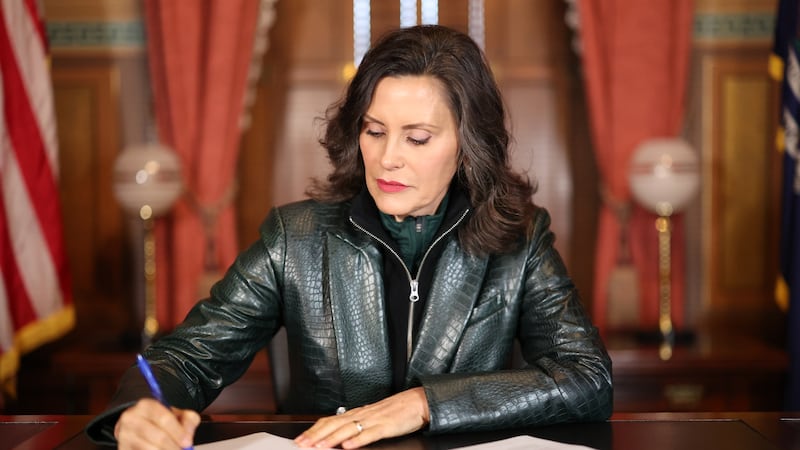
LANSING, Mich. (WLUC) - Governor Gretchen Whitmer signed two bills to reform Michigan’s juvenile justice system Friday.
The bills expand Michigan’s Indigent Defense Commission duties to include indigent defense of youth. According to a release sent Friday morning from the Governor’s office, the bills are intended to give every youth in the juvenile justice system access to representation and allow certain information sharing for research purposes in juvenile justice cases.
These bills implement recommendations by the Michigan Task Force on Juvenile Justice Reform, an effort led and co-chaired by Lt. Governor Garlin Gilchrist.
“We’re working hard to give every young person in Michigan the resources they need to thrive,” said Governor Whitmer. “Thanks to Lt. Governor Gilchrist’s leadership, we’ve invested over $50 million to implement the recommendations of the Michigan Task Force on Juvenile Justice Reform and build a fairer juvenile justice system. These two bills will help us build on this progress, ensuring kids can access legal representation and making our system more data driven. Let’s keep working together to empower more Michiganders to ‘make it’ in Michigan.”
Senate Bill 081, sponsored by state Senator Sue Shink (D-Northfield Twp.), expands the Michigan Indigent Defense Commission act to include indigent defense of youth. This ensures that youth who are unable to obtain legal representation for themselves, without substantial financial hardship, can use the commission’s services. The bill also prohibits youth from waiving their right to counsel unless they were advised on the consequences of the waiver and the waiver was on the record and in writing.
House Bill 4396, sponsored by state Representative Sarah Lightner (R-Springport), addresses the unavailability or unreliability of data found by the Michigan Task Force on Juvenile Justice Reform by allowing certain anonymized information of juvenile justice cases to be shared for research purposes. This bill will support researchers in accessing information that could help shape future policy to improve the juvenile justice system.
“Every young person deserves the chance to be successful,” said Lt. Governor Garlin Gilchrist II. “As chair of the Michigan Task Force on Juvenile Justice Reform, I’m proud of our work to change how young Michiganders experience the justice system and improve their outcomes. We’ve shown Michigan youth that we have their backs, they matter, and that we believe in them and their futures. These bills will build on our work and ensure every justice-involved youth can access the resources they need. Thank you to everyone who helped us get this done, and we will continue to stand tall so more young people in Michigan can envision a bright future for themselves.”
Reforming Michigan’s Criminal Justice System
Governor Whitmer’s office highlighted other criminal justice reform action her office has taken recently, including:
- Signed Clean Slate bills making hundreds of thousands of Michiganders eligible for automatic set aside of criminal records, expanding their opportunities for jobs and housing. Invested millions of dollars to assist returning citizens with expungement.
- Signed Clean Slate for Kids creating a process to automatically expunge juvenile records for those who don’t commit future offenses.
- Signed Raise the Age ensuring anyone under 18 is treated as a minor in juvenile court and receives rehabilitation services in the juvenile justice system to reduce recidivism.
- Launched the Task Force on Juvenile Justice Reform to improve the juvenile justice system and have invested over $53 million to implement the task force’s recommendations.
- Signed Juvenile Justice Reform bills investing in diversion and re-entry services to better position Michigan youth for successful adulthoods.
- Signed the Good Moral Character package expanding opportunities for Michiganders post-conviction or post judgment.
- Signed a civil asset forfeiture package increasing property protections for individuals who have not been convicted of a crime.
- Invested $22.1 million to support various investments that increase offender success through education, training, and reentry program.
- Created Family Treatment Court expanding access to drug treatment options, mental health resources, and support programs to help keep families together.
- Appropriated over $1.4 billion to help local trial courts support effective and fair assistance of counsel for indigent criminal defendants across the state.
- Invested $57.4 million in community jail diversion programs to divert individuals with mental illness, substance abuse disorders, and disabilities from the justice system.
- Established a policy that will guarantee critical medical resources and support to Department of Corrections’ pregnant and post-partum prisoners and their newborns.
- Launched the Task Force on Jail and Pretrial Incarceration to expand alternatives to jail and improve the effectiveness of the front end of Michigan’s justice system.
- Invested $18.7 million to reduce the cost of prisoner telephone charges, promoting their successful rehabilitation and reentry in society.
The video above will feature the TV6 livestream until staff can clip the corresponding story, if available, from broadcasts or other TV6 content. You can subscribe to our YouTube page or download TV6+ to stream the latest local news and weather.
Copyright 2026 WLUC. All rights reserved.