Epstein file shows Trump told police he was happy they were ‘stopping’ Epstein, called Maxwell ‘evil’
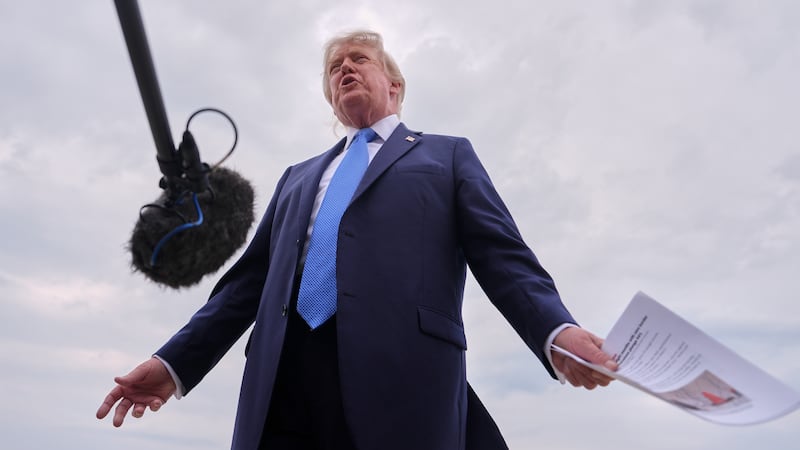
(Gray News/AP) — Documents released by the Justice Department show that President Donald Trump told the FBI he was happy that Jeffrey Epstein was caught.
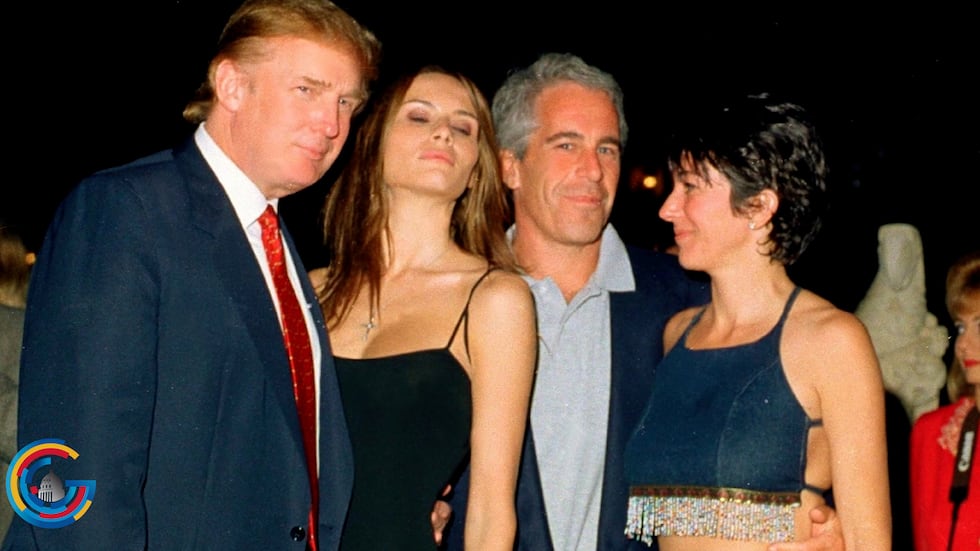
According to a newly released file dated April 2020, Trump called the Palm Beach Police Department to tell an investigator: “Thank goodness you’re stopping him [Epstein], everyone has known he’s been doing this.”
Trump also reportedly told the investigator that “people in New York knew Epstein was disgusting.”
Trump also told the investigator that Ghislaine Maxwell was Epstein’s operative, saying, “She is evil and to focus on her.”
In the phone call, Trump also reportedly told the investigator that he was around Epstein “once” when teenagers were present and that he “got the hell out of there.”
The document says Trump was “one of the very first people to call [police] when people found out that they were investigating Epstein.”
Trump’s reported phone call to police appears to be in stark contrast from several allegations against him in the Epstein files that were published by the Justice Department but were later removed from its website.
According to Newsweek, one entry described a tip reporting that an underage girl was allegedly forced to perform a sex act with Trump about 35 years ago in New Jersey.
Another entry included a claim from a woman who said she witnessed a sex trafficking operation at a Trump golf course in California in the mid-1990s.
Another complaint from an anonymous accuser said that Trump held parties at his Mar-a-Lago resort that involved auctioning off children for the purpose of sexual abuse.
Trump has repeatedly denied any wrongdoing, and he has never been charged in relation to the Epstein case.
Lawmakers review unredacted files
Several lawmakers visited a Justice Department office in Washington Monday to look through unredacted versions of the files on Epstein that the department has released to comply with a law passed by Congress last year. As part of an arrangement with the Justice Department, lawmakers were given access to the over 3 million released files in a reading room with four computers. Lawmakers can only make handwritten notes, and their staff are not allowed in with them.
Rep. Jamie Raskin, the top Democrat on the House Judiciary Committee, spent several hours in the reading room Monday morning. He told reporters as he returned to the Capitol that even if all the House members who triggered the vote on releasing the files “spent every waking hour over at the Department of Justice, it would still take us months to get through all of those documents.”
Democrats on Raskin’s committee are looking ahead to a Wednesday hearing with Attorney General Pam Bondi, where they are expected to sharply question her on the publication of the Epstein files. The Justice Department failed to redact the personal information of many victims, including inadvertently releasing nude photos of them.
“Over and over we begged them, please be careful, please be more careful,” said Jennifer Freeman, an attorney representing survivors. “The damage has already been done. It feels incompetent, it feels intimidating and it feels intentional.”
Democrats also say the Justice Department redacted information that should have been made public, including information that could lead to scrutiny of Epstein’s associates.
Rep. Thomas Massie, a Kentucky Republican who sponsored the legislation to force the release of the files, said that after reviewing the unredacted versions for several hours, he had found the names of six men “that are likely incriminated by their inclusion.” He called on the Justice Department to pursue accountability for the men, but said he could potentially name them in a House floor speech, where his actions would be constitutionally protected from lawsuits.
Massie, along with California Democratic Rep. Ro Khanna, said they also came across a number of files that still had redactions. They said that was likely because the FBI had turned over redacted versions of the files to the Justice Department.
Khanna said “it wasn’t just Epstein and Maxwell” who were involved in sexually abusing underage girls.
Release of the files has set in motion multiple political crises around the world, including in the United Kingdom, where Prime Minister Keir Starmer is clinging to his job after it was revealed his former ambassador to the U.S. had maintained close ties to Epstein. But Democratic lawmakers bemoaned that so far U.S. political figures seem to be escaping unscathed.
“I’m just afraid that the general worsening and degradation of American life has somehow conditioned people not to take this as seriously as we should be taking it,” Raskin said.
Maxwell invokes Fifth Amendment
Ghislaine Maxwell, the former girlfriend of Jeffrey Epstein, declined to answer questions from House lawmakers in a deposition Monday, but indicated that if President Donald Trump ended her prison sentence, she was willing to testify that neither he nor former President Bill Clinton had done anything wrong in their connections with Epstein.
The House Oversight Committee had wanted Maxwell to answer questions during a video call to the federal prison camp in Texas where she’s serving a 20-year sentence for sex trafficking, but she invoked her Fifth Amendment rights to avoid answering questions that would be self-incriminating. She’s come under new scrutiny as lawmakers try to investigate how Epstein, a well-connected financier, was able to sexually abuse underage girls for years.
Amid a reckoning over Epstein’s abuse that has spilled into the highest levels of businesses and governments around the globe, lawmakers are searching for anyone who was connected to Epstein and may have facilitated his abuse. So far, the revelations have shown how both Trump and Clinton spent time with Epstein in the 1990s and early 2000s, but they have not been credibly accused of wrongdoing.
Dressed in a brown, prison-issued shirt and sitting at a conference table with a bottle of water, Maxwell repeatedly said she was invoking “my Fifth Amendment right to silence,” video later released by the committee showed.
During the closed-door deposition, Maxwell’s attorney David Oscar Markus said in a statement to the committee that “Maxwell is prepared to speak fully and honestly if granted clemency by President Trump.”
He added that both Trump and Clinton “are innocent of any wrongdoing,” but that ”Ms. Maxwell alone can explain why, and the public is entitled to that explanation."
Democrats said that was a brazen effort by Maxwell to have Trump end her prison sentence.
“It’s very clear she’s campaigning for clemency,” said Rep. Melanie Stansbury, a New Mexico Democrat.
Copyright 2026 Gray Local Media, Inc. All rights reserved. The Associated Press contributed to this report.